

Crosslinked Polyisocyanurate Foams
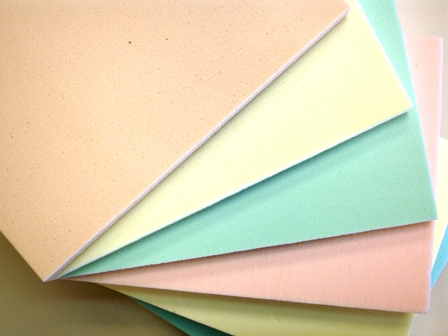 |
Hardness and impact resistance. |
|
MAIN USES 
|

Characteristics
|
DENSITY The wide range of densities offered allows for choosing the best balance between lightness, strength, and mechanical properties, in any situation and for any type of project (60, 80, 100, 130,....Kg/m3) |
STABILITY The panels are ideal for projects designed to last over time, as they are not subject to secondary reactions that could lead to dimensional variations. |
STRENGTH Sheets capable of withstanding high mechanical resistance in relation to their density. |
|
INSULATION The panels offer a good thermal and acoustic insulation coefficient, allowing for the creation of structures that are not only safe, resistant, and durable, but also pleasant and welcoming from an environmental comfort perspective. |
WATER ABSORPTION The closed-cell material features especially low water absorption, making the panels suitable for any outdoor application, means of transport, sporting goods, and nautical items. |
COMPATIBILITY The expanded foams are compatible with all resins normally used for composite system reactions, allowing for wide possibilities of customization and optimization of manufacturing processes. |
Structural Foam Types
 |
ATLAS Resistant to point loads, impact, and fatigue. |
 |
FENIX Fire retardant |
| + Information | |||